
Changing History Shouldn't Be the Goal
Setting out to change history may have the opposite effect.

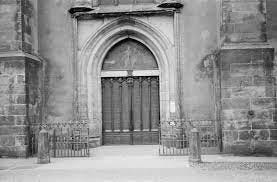
It's questionable whether he set out to change history. In fact, I doubt he did. He just wanted to change the practice of indulgences within the church. His name was Martin Luther, and he was a professor of Moral Theology at the University of Wittenberg. He was also a preacher.
When Luther nailed his 95 theses to the door of Castle Church in Wittenberg, he was trying to shift opinions and viewpoints about a specific practice. Many historians believe it was nothing more than a document that Luther produced intending to be argued in an academic setting. But 505 years ago today, the publication of Luther's 95 theses are credited with starting the Protestant Reformation.
When you really think about it, how many of the people who changed history had that as their ultimate goal? Probably very few.
For example, I doubt that Abraham Lincoln had any idea of the historical impact of his words when he delivered his "few remarks" at the dedication of the cemetery at Soldier Field in Gettysburg. Today, that short address is studied by speechwriters, speechmakers, and in University classrooms.
No, most of them didn't set out to make history but, instead, make a difference. And that's the key. People who set out to change history rarely do. People who set out to make a difference often wind up changing history. Luther, Churchill, and MLK all made a difference. Each of them also changed history.
It's an encouragement to all of us to make a difference where we are today. We might change history.