
Emotional Vampires
Why Some People Leave You Tired and Torn

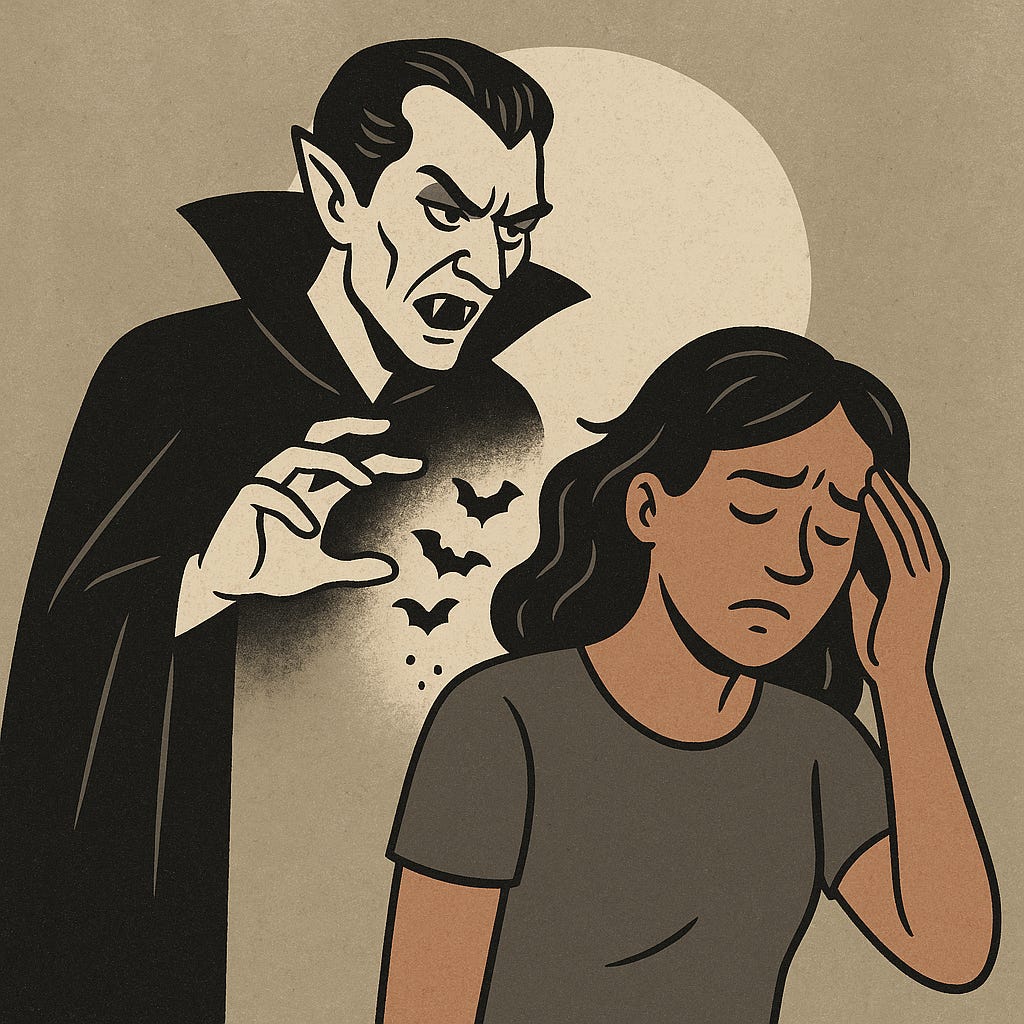
You’ve likely experienced it. You leave a conversation drained. It's as if something invisible siphoned your energy while you were just trying to be present, helpful, or attempting to forge a connection.
Congratulations, you've just been accosted by an emotional vampire. But understanding who and what they are is the first step to taking back control.
What Is an Emotional Vampire Anyway?
An emotional vampire is someone who leaves you feeling empty. They take your time, attention, and care without giving anything back, slowly wearing you down. They feed on your attention, empathy, patience, and presence, sucking the life out of you and the relationship.
Not all emotional vampires intend to hurt you. Many don't even realize they're doing it. They're just stuck in old habits that leave others feeling drained.
These energy thieves also appear in various forms. Here are a few:
The Martyr: Always the victim. They keep bringing up their pain, not to fix it but rather to stay in it and get attention.
The Charmer: Smooth and friendly at first, but their kindness is a way to stay in control, not to connect.
The Drama Magnet: Their life is one crisis after another. They depend on others, especially the kind people, to keep picking up the pieces.
The One-Upper: No matter what you say, they've done it bigger or better. Every conversation turns into a competition.
The Blame Shifter: They rarely take responsibility. Somehow, their mistakes end up being your fault.
Why It Feels So Draining
There's a brain-based reason why some people leave you feeling wiped out. It's called mirror neurons. These are tiny parts of your brain that pick up on other people's emotions. So, if you're around someone who's stressed, angry, or needy, your nervous system can start to copy that, even if you don't realize it. (https://positivepsychology.com/mirror-neurons/)
There's A Long-Term Cost Too
Tough or emotional conversations with these people don't just wear you out. They also take a toll on your body. Your stress hormones surge, your heart rate increases, and your brain goes into "fight or flight" mode. And when this happens frequently, it has a long-term, negative impact.
Over time, it chips away at your strength. You may feel more tired, more moody, and even get sick more often. It can also make it more difficult to think clearly or stay emotionally grounded.
Chronic emotional depletion alters more than your mood. It affects your identity.
You may begin to second-guess yourself. You question whether your boundaries are valid, whether you're overreacting. You become more attuned to others' emotions than your own. You shrink in subtle ways, such as staying quiet, avoiding conflict, or saying "yes" even when you mean "no."
Relationships lose balance. You give, they take. Eventually, that imbalance becomes the norm.
How to Recognize "Them"
These "Soul Sappers" aren't always obvious in the moment. But a few questions can help clarify what and who you are dealing with:
Do I feel worse, i.e., tired, tense, emotionally heavier, after interacting with this person?
Do I feel a sense of dread before talking to them?
Do I regularly feel responsible for managing their emotions or fixing their problems?
Do they show genuine interest in how I'm doing, or only when it benefits them?
Do they resist or punish boundaries through guilt, blame, or deflection?
If these patterns feel familiar, it may be time to reassess the relationship.
What You Can Do About It
Name the pattern: You don't need to label the person, but it's important to acknowledge what's happening. Clarity is the first step toward change.
Reassert your boundaries: You don't need to explain or apologize for protecting your energy. "No" is a complete sentence. So is "I'm not available for that."
Create space between you and them: If someone is persistently draining, consider reducing or limiting contact. Distance isn't punishment. It's preservation.
Invest in mutually nurturing relationships: Spend time with people who make space for you, who listen, support, and reciprocate emotionally.
Remember, your emotional well-being is paramount. After difficult interactions, take the time to reset and recalibrate. Whether it's through journaling, movement, stillness, or therapy, prioritize your own emotional well-being.
No, You're Not Overreacting
You only have so much energy to share. Your emotional capacity is not an unlimited resource. So, guarding it isn't selfish but rather a necessity.
If you consistently feel depleted around certain people, it may be a signal. Take action and protect yourself.
That's not being weak. That's being wise.